
Rabbit Care Resource Center
Science-based guidance for rabbit, guinea pig, chinchilla, and other small pet parents.
Welcome to our comprehensive collection of educational resources covering everything from rabbit bonding techniques to emergency care, housing setups to enrichment ideas. These articles represent years of hands-on experience caring for our own rescue rabbits (Marshmallow, Macaron, and Chocolatte), volunteering with LA and Orange County shelters + rescues, and applying behavioral research principles to real-world rabbit care challenges.
Whether you're a first-time rabbit parent or an experienced small pet parent, you'll find practical, research-backed advice to help you provide the best possible care for your pets.
Browse our resource library below - organized chronologically from most recent to oldest, covering topics including bonding, health, nutrition, housing, enrichment, veterinary care, and more.
Looking for something specific? Use your browser's search function (Ctrl+F or Cmd+F) to find articles by keyword or browse by category:
Rabbit Health · Rabbit Care + Life · Adoption + Rescue · BCB Archive
what to consider before surrendering your rabbit
We are not here to guilt you.
Surrendering a rabbit is not always the wrong decision. Sometimes it is the most responsible one. What we care about is that when it happens, it happens thoughtfully - with your rabbit's welfare as the priority, not an afterthought.
Before you make that call, we ask you to sit with these questions honestly.
what to expect before your rabbit's stay - health requirements + why they matter
If you have ever boarded a dog or cat, you already know the drill:
Current rabies vaccine
Bordetella
DHPP
Flea and tick prevention
A wellness exam within the past year
No reputable dog or cat boarding facility will accept a guest without these - and no one questions it. It is simply understood that a shared environment requires shared standards.
Bun Chia Burrow holds the same standards for rabbits, guinea pigs, chinchillas, hamsters, and rats. Yet, because your small pets are still widely perceived as low-maintenance animals that don't require "real" veterinary care, we are occasionally asked to explain ourselves.
So we hope this helps.
rabbit trends on social media: why we walked away
Bunnies are not our entertainment.
We have always known that - but we did not always act like it.
This article is not written from a pedestal. It is written from experience -including our own participation in content we are no longer proud of. If BCB is going to ask the rabbit community to hold a higher standard, we are willing to hold ourselves to it first.

before you board your rabbit
In August 2026, a Studio City pet boarding facility came under investigation following the suspicious deaths of multiple dogs in their care. We will not name the facility as the investigation is ongoing. However, the family whose dog died had done their research - the facility had positive Yelp reviews; they met the trainer; they paid $10,000. Yet, none of that was enough - because they never saw the actual facility, never confirmed who would be physically present overnight, and never verified that the business had a real address.
In response to the incident, LA Animal Services urged every pet parent to tour boarding facilities before dropping off their animals, stating that a reputable facility will welcome prospective clients to inspect their accommodations, safety protocols, and general environment.
However, we think that is the minimum - although Bun Chia Burrow is a small pet hotel, we implore you to ask the following questions.
what to look for in a rabbit bonding facility
In 2028, BCB's Bonding Retreat will go on sabbatical. Our waitlist is full through winter 2027, and we will honor every reservation on it. But we will not be taking new bonding clients after that.
We are not sunsetting this service because bonding doesn't matter. We are sunsetting it because doing it right is one of the most demanding things we do - and we would rather close with integrity than continue at a standard we can no longer sustain.
Before we do, we want to leave the community with something useful: the standard we held, and what you should be asking any facility before you hand your rabbits to them for bonding.
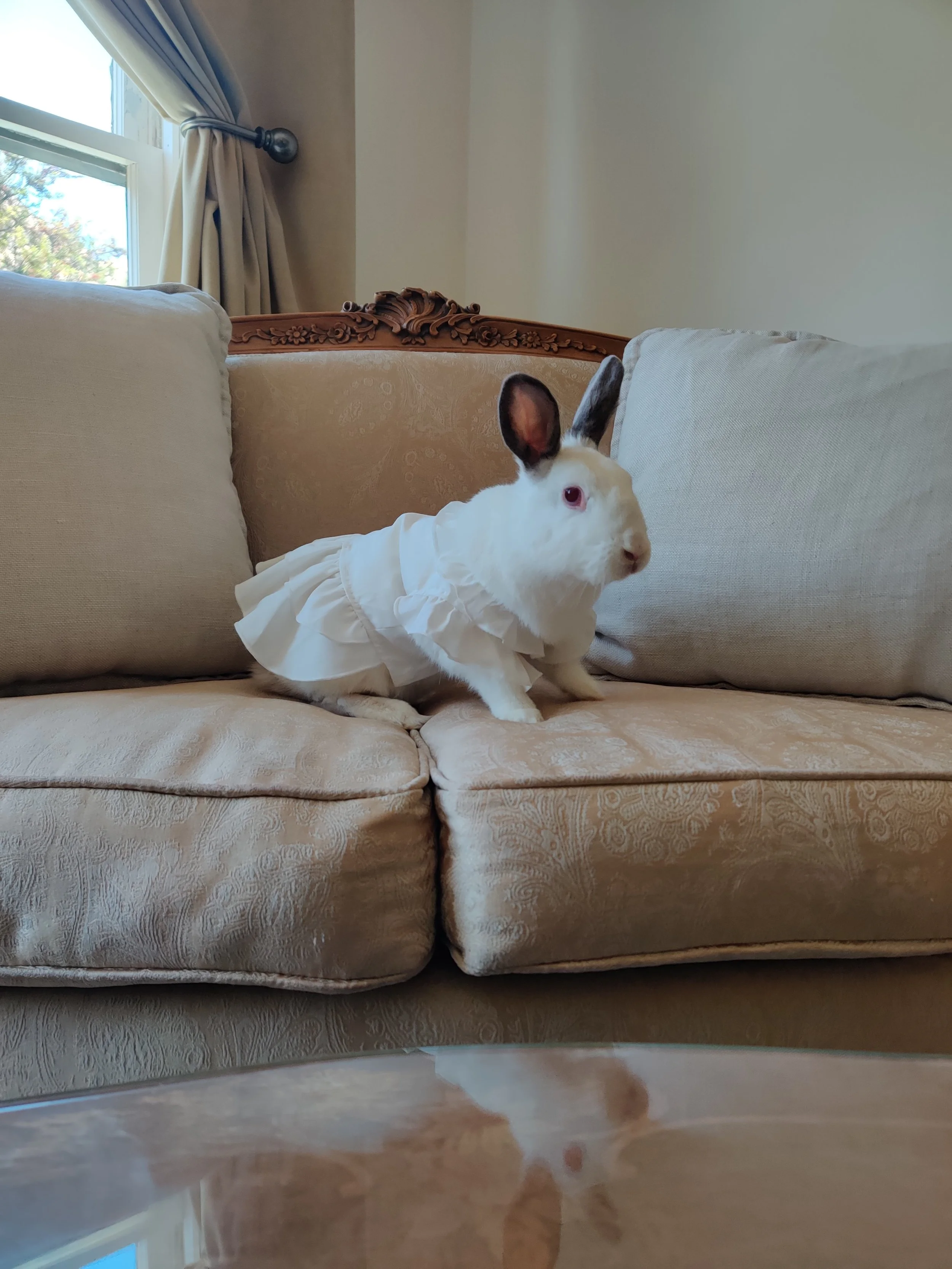
rabbits in clothes: is it safe?
We are going to say something that might surprise you: rabbits in clothes is not automatically wrong.
It is also not automatically fine. The answer - as with most things in rabbit care - depends entirely on the individual rabbit, their relationship with you, and how the experience is introduced and managed.
Here is what we actually think, four years into running BCB and a lifetime into living with rabbits.
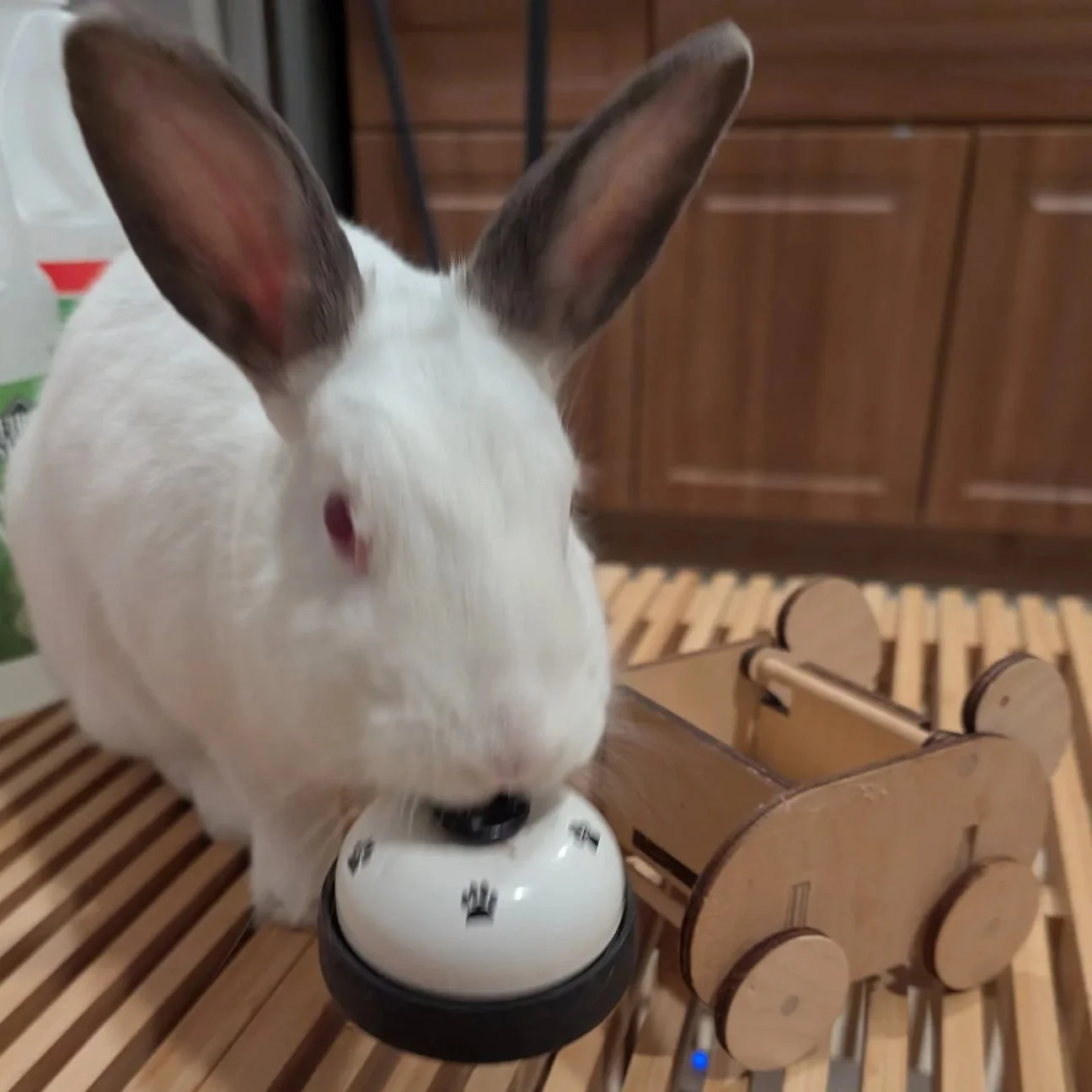
rabbit trick training: a complete beginner's guide
Rabbits can learn tricks. Not in a "isn't that cute" way - in a genuinely scientifically grounded, behaviorally meaningful way that strengthens your bond, provides mental enrichment, and gives your rabbit agency over their environment.
At BCB, we use Applied Behavior Analysis (ABA) principles for all of our training work. The same framework used in human behavioral therapy applies remarkably well to rabbits - because behavior is behavior, regardless of species. Here is everything you need to know to get started.
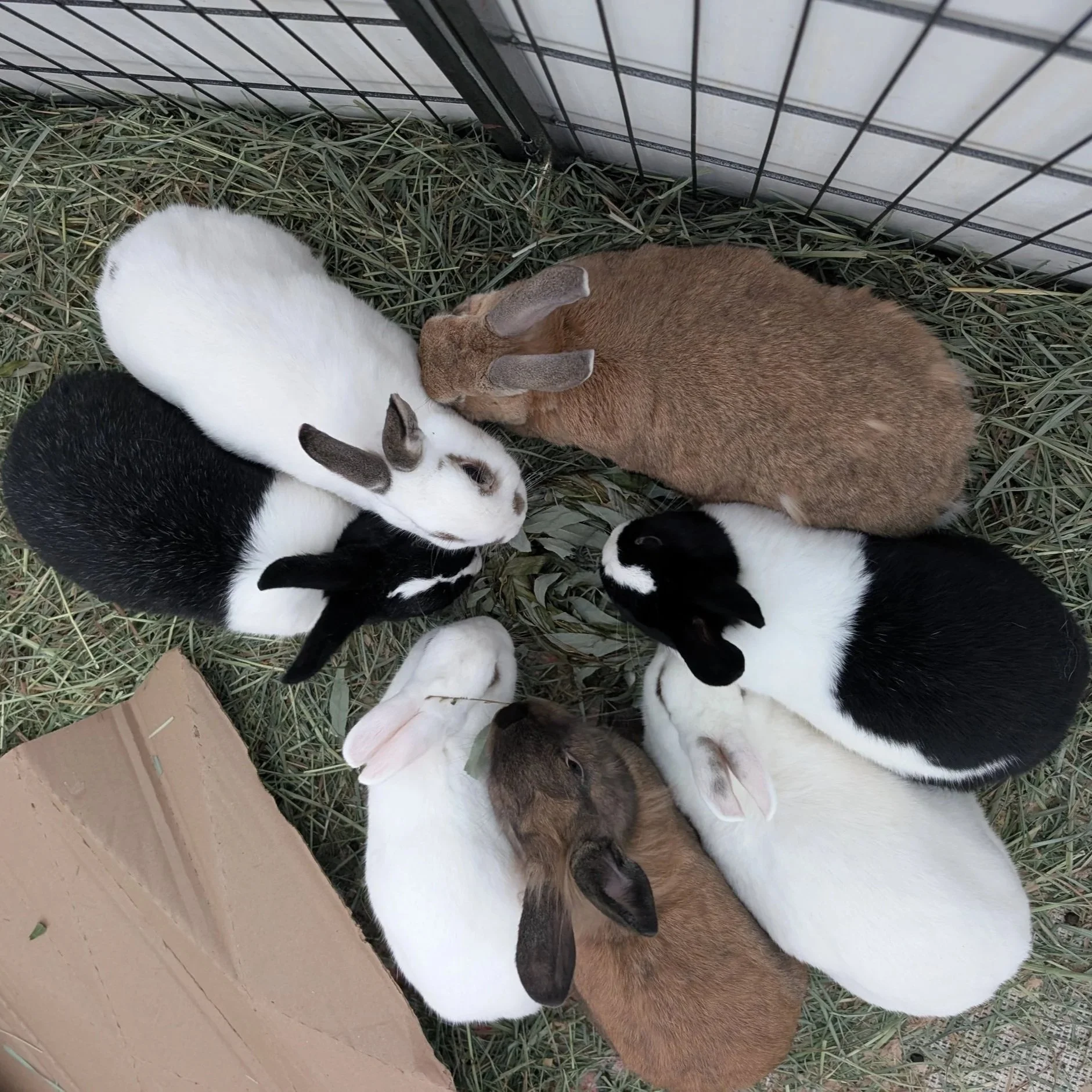
why most bunny social hours are for the humans, not the rabbits
We are going to say something that might be unpopular in the rabbit community: most bunny social hours are not for the rabbits. They are for the humans.
We understand the appeal. A room full of binkying bunnies is objectively delightful. The photos are adorable. The concept sounds wholesome. But what is actually happening in that room - from the rabbits' perspective - depends entirely on why the event exists and how it is run. And most of the time, the answer to both of those questions is not good enough.

should dogs and cats live with rabbits? the honest answer.
We are writing this article because our bravest mama rabbit died.
She was one of sixteen bunnies we fostered from a hoarding situation. The most resilient girl, she gave birth and nursed 18 babies across two litters. She was bonded to her daughter Venus. She was loved by the BCB and the community.
She was murdered by a dog.
We are not writing this to make anyone feel guilty. We are writing this because the rabbit community has been too polite about this topic for too long, and politeness will get rabbits killed. So here is the honest answer - the one we wish more people took to heart before it was too late.